The conversion
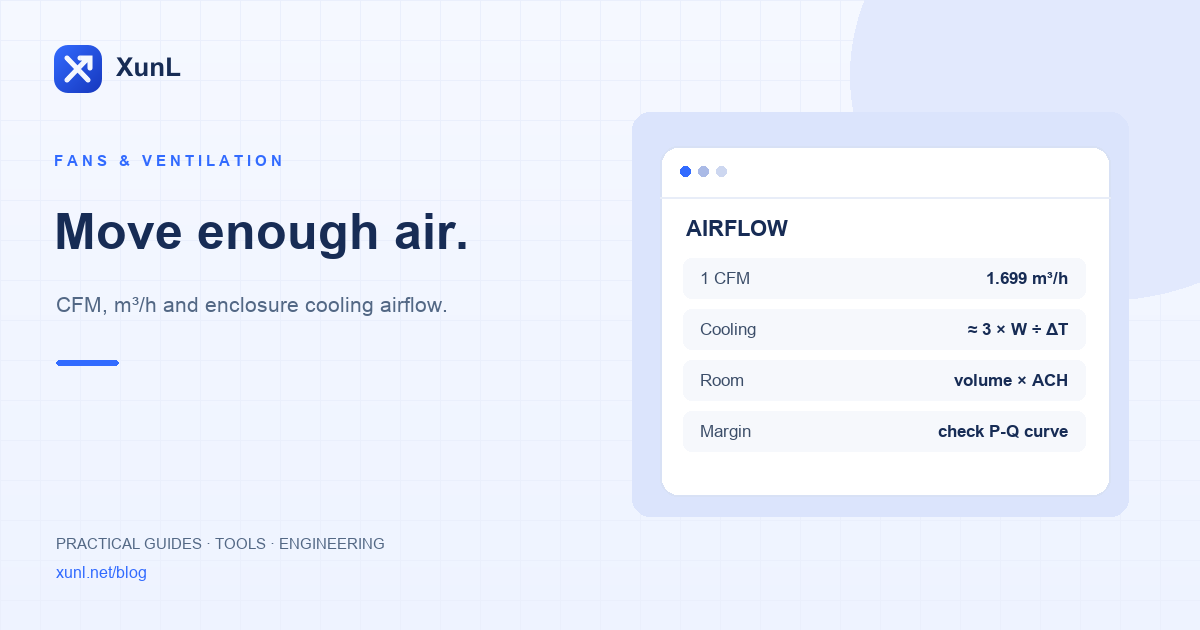
- 1 CFM (cubic foot per minute) ≈ 1.699 m³/h
- 1 m³/h ≈ 0.5886 CFM
One cubic foot is 0.0283168 m³; multiplied by 60 minutes that gives 1.699 m³/h. European and Asian catalogs usually quote m³/h and North American ones CFM, so convert before comparing fans. The CFM to m³/h airflow calculator does it directly.
How much airflow an enclosure needs
Drives, power supplies and PLCs heat the enclosure; a fan has to carry that heat out. From a simple heat balance on the air:
Airflow (m³/h) = 3600 × P ÷ (ρ × cp × ΔT)
- P: heat load inside the enclosure (W)
- ρ: air density, about 1.2 kg/m³ (20 °C, sea level)
- cp: specific heat of air, about 1005 J/(kg·K)
- ΔT: allowed temperature rise between inside and ambient (°C or K)
With the constants filled in:
- Airflow (m³/h) ≈ 3 × P ÷ ΔT
- Airflow (CFM) ≈ 1.76 × P ÷ ΔT (°C), or 3.17 × P ÷ ΔT (°F)
Worked example
Heat load 750 W, ambient 35 °C, maximum allowed inside 45 °C, so ΔT = 10 °C:
- Airflow ≈ 3 × 750 ÷ 10 ≈ 224 m³/h (about 132 CFM)
- Select a fan for roughly 1.2 to 1.3 times that: about 270 to 290 m³/h
Why the margin
- Catalog airflow is free-air flow with no resistance. Filters and louvers reduce it noticeably, so find the operating point on the fan's pressure-flow curve at your system resistance.
- Hot or high-altitude air is thinner, so the same volume flow removes less heat. Correct for air density with the air density calculator.
- Use the maximum heat load, from the equipment's rated losses or the power supply rating.
Room ventilation
For plant rooms, switch rooms and warehouses, size by air changes:
Airflow (m³/h) = room volume (m³) × air changes per hour (ACH)
Take the ACH value from the applicable code or design brief; the CFM calculator has a mode for this as well.
What happens when you change fan speed
For the same fan, the affinity laws apply approximately: airflow is proportional to speed, pressure to speed squared and power to speed cubed. At 80% speed, power falls to about 51%, which is why EC fans and variable-speed drives save energy. Work through different speeds with the fan affinity laws calculator.
Source
Tools for your next step
Put this guide to work for your business
Create a company account to try website monitoring and the inquiry workbench. Compare Pro plans for your team’s ongoing needs.
No card required. The trial returns to Free when it ends. Paid monthly credits are not included in the trial.